
Nerima Ward, Tokyo: The ultimate guide for students and young professionals in 2026
Tokyo has a reputation for being expensive. And for most of its 23 wards, that reputation is entirely deserved. But there is one ward where the math breaks differently — where your yen stretches further, your apartment is actually livable, and the commute to central Tokyo is shorter than most people assume. That ward is Nerima (練馬区), and if you are a student, a fresh graduate, or a young professional relocating to Tokyo in 2026, it deserves your full attention.
Nerima is not the ward you see on travel blogs or real estate pitch decks targeting corporate expat packages. It is the ward where people who actually know Tokyo’s rental market end up when they run the numbers honestly. Quiet streets, genuine green space, anime history baked into the DNA of the place, and some of the most competitive rents in the entire city. Let’s break it down.
Where is Nerima Ward?
Nerima is located at the westernmost point of Tokyo’s 23 wards, bordering Itabashi, Suginami, and Saitama Prefecture. It sits in the northwestern arc of the city, which means it is positioned well for commutes into the major hubs of Ikebukuro and Shinjuku — two of Tokyo’s biggest employment and education centers — without the price tag that comes with actually living near them.
The ward covers roughly 48 square kilometers and is home to around 750,000 residents. Nerima is Tokyo’s greenest ward, a fact that becomes immediately obvious when you explore it on foot or by bicycle: parks are large, streets are tree-lined, and the general pace of life is several notches calmer than anything you will find inside the Yamanote Line.
The rent numbers that will make you reconsider everything
Here is the headline: at ¥64,700/month for a 1K, Nerima is the cheapest ward overall in Tokyo — and 17 minutes from Shinjuku puts it ahead of pricier suburbs that take longer to reach.
That figure is not a typo and it is not a catch. It is simply what happens when you move a few stations past the wards that everyone has heard of.
Typical Nerima rental price ranges (2026):
- 1R / 1K (solo students, young singles): ¥58,000 – ¥75,000/month
- 1LDK (couples, professionals needing a home office): ¥85,000 – ¥130,000/month
- 2LDK (flatmates, small families): ¥130,000 – ¥180,000/month
- Detached house (一戸建て): ¥180,000 – ¥280,000/month
Compared to central Tokyo wards, apartments in Nerima are noticeably larger for the price. Many residents moving from Shibuya, Nakano, or Meguro are surprised by how much additional space becomes available within the same budget. This is the Nerima advantage in its most practical form: instead of a 20m² box in a fashionable neighborhood, you get a genuinely functional apartment with a real kitchen, storage, and room to actually live your life.
Adachi, Nerima, and Itabashi are the most popular student wards due to their direct train access to major university hubs and 1K rents under ¥70,000/month. For international students managing a budget that needs to cover tuition, food, transport, and utilities simultaneously, this is not a minor advantage — it is the difference between financial stress and financial stability.
Transport: Closer to the city than you think
The most common objection to Nerima is the commute. Here is why that objection does not hold up in 2026.
Transportation access in Nerima is excellent, with lines such as the Seibu Ikebukuro Line, Seibu Shinjuku Line, Tokyo Metro Yurakucho Line, Fukutoshin Line, and Toei Oedo Line running through the ward. Residents can reach areas like Ikebukuro, Shinjuku, and Tokyo Station in a short time.
Specifically:
- Ikebukuro: 6–12 minutes on the Seibu Ikebukuro Line
- Shinjuku: 17–25 minutes via the Oedo Line or Seibu Shinjuku Line
- Shibuya: 25–35 minutes via Fukutoshin Line direct
- Tokyo Station / Marunouchi: 30–40 minutes via Yurakucho Line
For students attending universities in or around Ikebukuro — one of Tokyo’s densest concentration of universities and vocational schools — Nerima is essentially next door. Hosei University, Tokyo University of Agriculture and Technology, and a cluster of language schools and professional training institutes all sit within straightforward commute range. Young professionals working in Shinjuku or Ikebukuro have an even simpler case: the commute is fast, reliable, and significantly cheaper to live for than anything closer in.
Nerima’s secret identity: The birthplace of anime
Nerima has a cultural identity that sets it apart from every other affordable ward in Tokyo, and it is one that resonates particularly strongly with younger residents: Nerima is known as a hub for anime production companies, making it a favorite among anime fans.
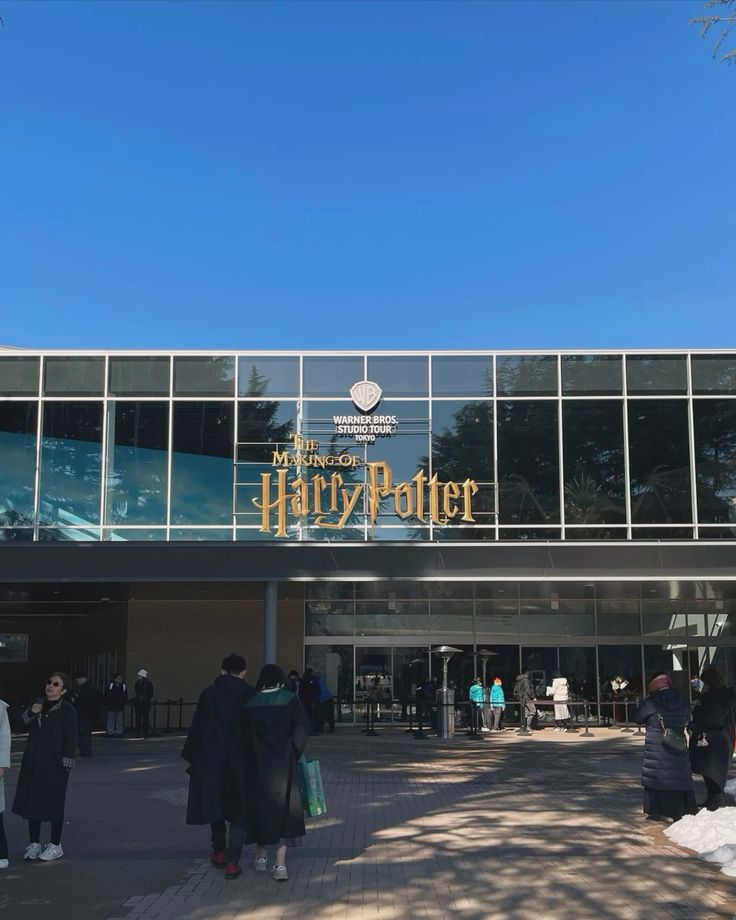
This is not a marketing label — it is historical fact. Nerima is where the Japanese anime industry was born. Toei Animation, one of the most storied studios in the world (Dragon Ball, Sailor Moon, One Piece), is headquartered here. Mushi Production, the studio founded by the legendary Osamu Tezuka, was established in Nerima. For decades, a remarkable concentration of animation studios, illustrators, voice acting agencies, and manga publishers has called this ward home.
The practical implication for young creatives and media professionals: Nerima is one of the few places in Tokyo where you can live affordably and find yourself genuinely embedded in the industry you care about. Whether you are studying animation, building a portfolio, working in media, or simply someone who grew up on anime and wants to live inside a piece of that history, Nerima delivers something no other ward in this price range can offer.
Sub-areas to know in Nerima
Nerima Station (練馬駅) is the ward’s main hub — more urban, more connected, more convenient, and slightly busier than other parts of the ward. It suits young professionals, couples, and people who commute daily and want a balance between quietness and convenience. The surrounding area has solid commercial density: supermarkets, restaurants, banks, and the kind of practical daily infrastructure that makes life easy without much effort.
Oizumigakuen (大泉学園駅) is one of the most culturally significant neighborhoods in Nerima and arguably its most charming. The station name literally contains the character 学園 (gakuen — academy/campus), and the area has a long association with the creative community. Wide, tree-lined streets, a relaxed café culture, and strong local community ties make this a particularly appealing base for students and young creatives who want calm surroundings without feeling cut off.
Hikarigaoka (光が丘) is a planned residential district anchored by Hikarigaoka Park, one of the largest green spaces in western Tokyo. The park spans over 60 hectares and is a genuinely spectacular resource for anyone who values outdoor space as part of daily life. The area is well-served by the Oedo Line and has a clean, well-maintained residential atmosphere. For young professionals who prioritize quality of life over nightlife proximity, Hikarigaoka is an excellent option.
Shakujii-Koen (石神井公園) is built around the beautiful Shakujii Park and its two ponds — a rare pocket of genuine natural landscape inside the Tokyo city limits. The surrounding residential streets have an almost village-like quality that feels completely at odds with being 25 minutes from Shinjuku. It is consistently rated among Tokyo’s most livable neighborhoods by residents who have lived across multiple wards.
Daily life infrastructure for international students and young professionals
One underrated advantage of Nerima is grocery practicality. Unlike central Tokyo where many residents rely heavily on convenience stores, Nerima supports more realistic weekly shopping habits, with larger supermarkets, better bulk shopping, easier bicycle transport, larger apartment kitchens, and better storage space.
For international students specifically, the ward office provides multilingual support for residency procedures, health insurance enrollment, and the various bureaucratic steps that accompany a first move to Japan. English-language support is available, and the ward’s growing international population means there is a functional support network for new arrivals navigating the system for the first time.
The ward is also genuinely bike-friendly — flat terrain, wide residential streets, and abundant cycling infrastructure make the bicycle a practical day-to-day transport option in a way that simply is not possible in the crowded central wards.
Why Nerima makes sense right now
The honest answer to why Nerima works for students and young professionals in 2026 is this: it is the only ward in Tokyo where you can have a real apartment, a fast commute, cultural identity worth caring about, and serious green space — all without the budget compromise that every other combination of those features normally requires.
Students can save significantly by living in outer wards like Nerima, with direct trains into the center — most students spend ¥130,000–¥190,000 per month total including rent, utilities, food, and transport. In a city where those same costs in a central ward can run ¥250,000 or more per month, Nerima is not a fallback option. It is a smart financial decision that does not ask you to sacrifice the quality of your Tokyo experience.
Find your home in Nerima with Momo Estate
At Momo Estate, our bilingual team specializes in helping students, young professionals, and international residents find the right home in Tokyo — including Nerima’s best listings across all budget ranges. We handle the paperwork, the negotiations, and the parts of the Japanese rental process that can feel overwhelming for first-time renters in Japan.
📩 Get in touch today for a free consultation and to browse current listings in Nerima and across the Kanto region.
Phone: 03-6820-6203 | Email: info@momoestate.jp | Languages supported: EN / VI / JP