
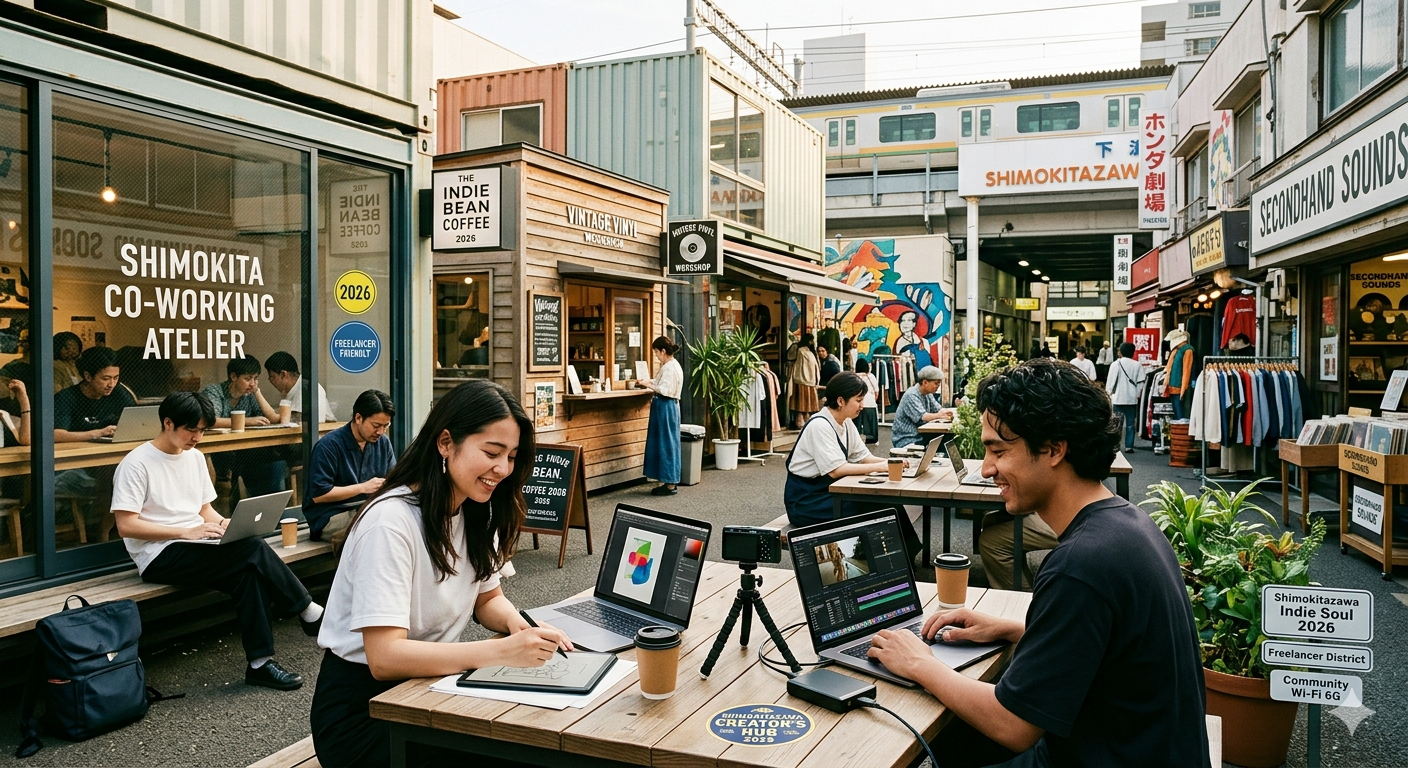
The best neighborhoods for freelancers and creatives in 2026
For the modern freelancer, Tokyo is no longer just a sprawling metropolis of salarymen and rigid corporate structures. In 2026, the city has transformed into a premier global hub for the solo-preneur and the digital creative. With the expansion of 6G connectivity, a surge in community-focused co-working spaces, and a culture that increasingly values the side-hustle, choosing where to plant your roots is a strategic decision that impacts both your inspiration and your bottom line.
Whether you are a graphic designer, a nomadic writer, or a video editor, here are the top Tokyo neighborhoods that offer the perfect blend of lifestyle, networking, and creative energy.
1. Shimokitazawa: The Indie soul of Tokyo
If your creative process thrives on subculture, vintage aesthetics, and live music, Shimokitazawa (or “Shimokita”) remains the undisputed champion. Located just a few minutes from Shibuya and Shinjuku on the Odakyu and Keio Inokashira lines, this neighborhood has undergone a “gentle” redevelopment that has only enhanced its appeal to freelancers.
The creative vibe: Shimokita is famous for its narrow alleys filled with second-hand clothing stores, independent theaters, and vinyl shops. It attracts a younger, non-conformist crowd.
Freelancer infrastructure: The area is home to numerous concept cafes that welcome laptop workers. The Bonus Track development is a standout—a communal space featuring small businesses, outdoor seating, and high-speed Wi-Fi designed specifically for the creative class.
Why it works: It offers a sense of community that is often missing in Tokyo’s more sterile districts. Networking happens naturally over a craft coffee or a craft beer.
2. Kiyosumi-shirakawa: The Coffee Town for focused work
On the eastern side of the Sumida River lies Kiyosumi-shirakawa, a district that has evolved from an industrial warehouse area into Tokyo’s Blue Bottle caffeine capital. For creatives who need a quiet, aesthetically pleasing environment to hit deadlines, this is the place to be.
The creative vibe: Think industrial chic meets traditional Japanese gardens. The neighborhood is dotted with art galleries (like the Museum of Contemporary Art Tokyo) and minimalist roasteries.
Freelancer infrastructure: Many of the old warehouses have been converted into spacious, high-ceilinged co-working studios and shared ateliers. The quiet streets are perfect for thinking walks along the river or through the stunning Kiyosumi Gardens.
Why it works: It’s less chaotic than western Tokyo. The abundance of natural light and open space is a rarity in the city, making it ideal for photographers and visual artists who need a serene home-studio environment.
3. Nakano: The affordable hub for Pop-Culture creatives
For freelancers in the anime, gaming, or digital illustration industries, Nakano offers a perfect synergy between work and play. Located just one stop away from Shinjuku on the Chuo Line, it provides a much more affordable entry point than its flashy neighbor.
The creative vibe: Central to the neighborhood is Nakano Broadway, a maze of collectible shops and specialized bookstores. The energy here is focused and otaku-centric, but with a modern, professional edge.
Freelancer infrastructure: Nakano boasts some of the best value-for-money rental apartments in central Tokyo. There are several 24-hour co-working spaces near the station, catering to those who work on international time zones.
Why it works: Low overhead costs. For a freelancer just starting out, Nakano allows you to live close to the action of Shinjuku without the exorbitant rent, all while being surrounded by the media culture that likely inspired your career.
4. Daikanyama: The luxury choice for design professionals
If your freelance career is at a stage where you are hosting high-end clients or working in luxury branding, Daikanyama is the ultimate status neighborhood. Often referred to as the Brooklyn of Tokyo, it is sophisticated, green, and impeccably designed.
The creative vibe: It is the epicenter of Tokyo’s fashion and architecture scene. The architecture itself—specifically the Daikanyama T-Site (Tsutaya Books)—is an world-class resource for research and inspiration.
Freelancer infrastructure: While living here is expensive, the networking opportunities are unparalleled. You are likely to bump into agency directors and influential influencers at the local bistros. The T-Site Share Lounge is perhaps the most beautiful place to work in the entire city.
Why it works: Reputation and aesthetics. Living or working in Daikanyama tells your clients that you have a refined eye and a successful practice.
5. Koenji: The sanctuary for the slow life creative
For those who find Tokyo’s hustle culture draining, Koenji offers a sanctuary. It is a neighborhood that prides itself on being a bit rough around the edges, fiercely independent, and incredibly welcoming.
The creative vibe: Koenji is the birthplace of Japanese punk and a stronghold for DIY culture. It’s filled with “shotengai” (shopping streets) where you can find cheap, home-cooked meals—essential for the “starving artist” phases of freelance life.
Freelancer infrastructure: The neighborhood is full of “Kissaten” (traditional coffee shops) that have a relaxed policy toward long stays. The rent is among the most competitive for any neighborhood within 10 minutes of Shinjuku.
Why it works: It encourages a “slow life” approach. If your creativity requires time to breathe and space to experiment without the pressure of high-fashion trends, Koenji will feel like home.
Key considerations for 2026:
When choosing your neighborhood, consider these three Freelancer factors:
The “Third Space”: Does the area have enough cafes or libraries? You cannot work from your small apartment 24/7.
Transit density: Ensure you are on a line that gives you direct access to the major business hubs (Shibuya, Shinjuku, or Tokyo Station) for when you have those rare in-person meetings.
Local community: Look for neighborhoods with active “NPO” or local business associations that host networking events.
Conclusion
Tokyo is a city of “villages.” For the creative freelancer in 2026, the best place to live is the one that mirrors your current output. Whether it’s the high-octane design world of Daikanyama or the cozy, vintage-soaked streets of Shimokitazawa, your neighborhood is your most important tool. Choose the one that makes you want to wake up and create.