
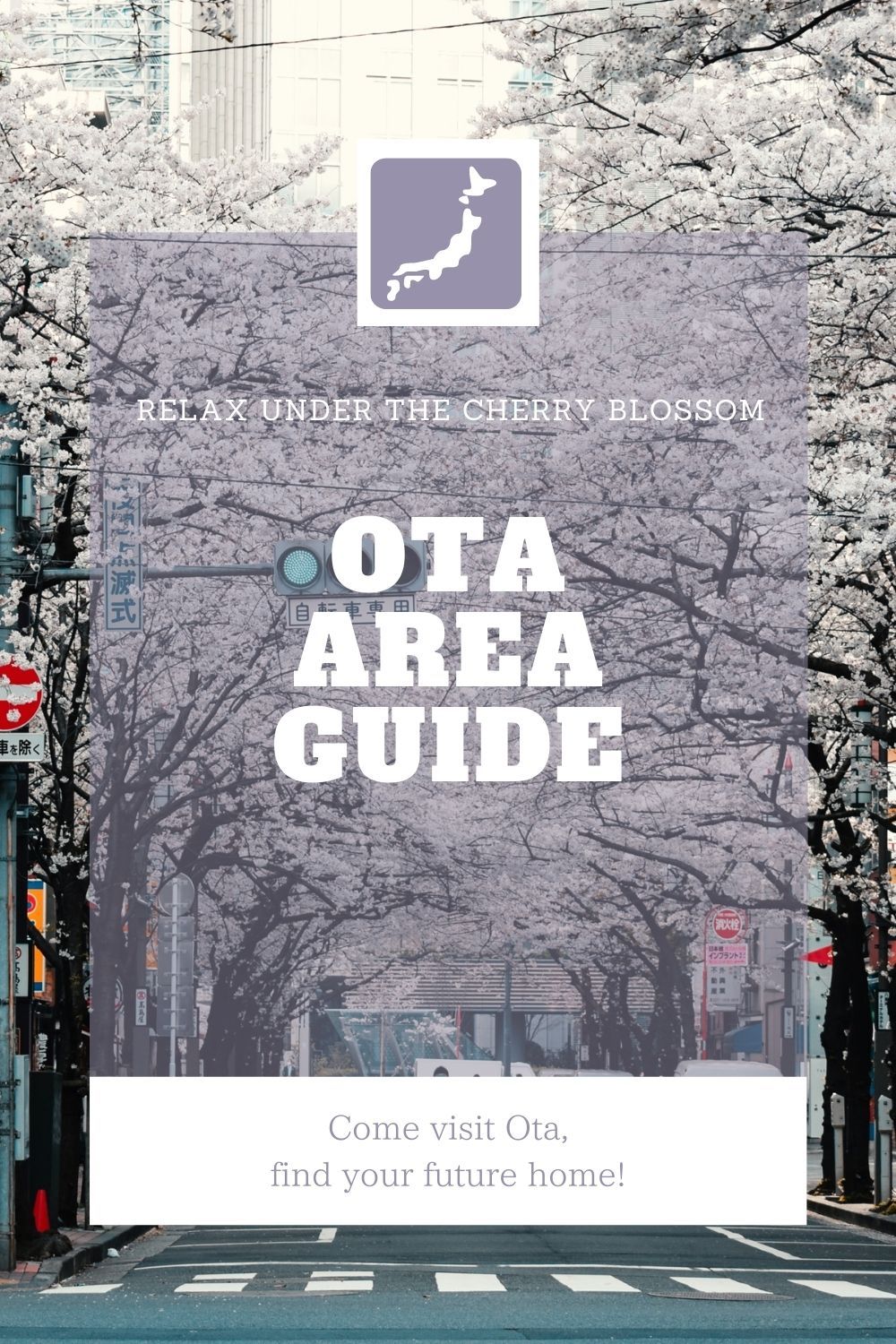
The Ultimate Guide to Living in Ota-ku, Tokyo: A Deeply Optimized Perspective on the Tokyo Rental Market Data and Ota-ku Area Lifestyle
When navigating the expansive matrix of the Tokyo rental market, prospective residents frequently face a classic optimization problem: balancing raw transit velocity into central business districts with localized square-footage yields, safety indexes, and community tranquility.
While popular northern hubs like Akabane or eastern sectors like Sumida dominate mainstream relocation conversations, Ota-ku (大田区)—Tokyo’s southernmost ward—presents a uniquely optimized alternative. As the largest ward by area in Tokyo’s traditional 23-ward core, Ota-ku acts as a massive socio-economic bridge between the hyper-dense Tokyo metropolis and the industrial-commercial powerhouse of Kanagawa Prefecture.
This comprehensive guide dissects Ota-ku’s localized micro-markets, structural yields, transit networks, and lifestyle profiles to provide a completely transparent blueprint for your next relocation.
1. Demographic and Geographic Overview: The Gatekeeper of Southern Tokyo
Ota-ku is a fascinating study in geographic duality. Spanning over 60 square kilometers, it is a macroeconomic engine driven by three primary pillars: high-end residential enclaves, historic manufacturing corridors, and international transit infrastructure.
+-----------------------------------------------------------------+
|                           OTA-KU URBAN MATRIX                   |
+-----------------------------------------------------------------+
|                                                                 |
|   [NORTHWEST: DEN-EN-CHOFU]   ---> Premium Luxury & Greenery     |
|   [CENTRAL: KAMATA / OMORI]    ---> Hyper-Connected Transit Hubs |
|   [SOUTHEAST: HANEDA AIRPORT] ---> Global Logistics & Innovation |
|                                                                 |
+-----------------------------------------------------------------+
The Residential Northwest: Neighborhoods like Den-en-chofu and Yukigaya sit on the lush terraces of the Musashino Musashino Upland, representing some of Tokyo’s most historic, strictly zoned premium residential real estate.
The Commercial and Transit Core: Kamata and Omori form the high-density urban spine of the ward, bustling with retail networks, culinary depth, and multi-line train stations.
The Global Gateway: The eastern coastal strip is anchored entirely by Haneda International Airport, driving massive municipal investment, infrastructure maintenance, and global corporate presence to the ward.
2. Macro Transit Analytics: Multi-Line Infrastructure and Asymmetrical Commutes
From a data-driven transit perspective, Ota-ku offers an incredibly robust network that bypasses the traditional bottleneck chokepoints of Tokyo’s northern and western suburbs. Rather than relying on a single major artery, Ota-ku is sliced by multiple private and public rail operators.
+------------------------+---------------------------------------+-----------------------+
| Line / Operator        | Key Ota-ku Stations                  | Major Terminals Hit   |
+------------------------+---------------------------------------+-----------------------+
| JR Keihin-Tohoku Line  | Omori, Kamata                         | Tokyo, Shinagawa,     |
|                        |                                       | Yokohama              |
+------------------------+---------------------------------------+-----------------------+
| Tokyu Toyoko Line      | Den-en-chofu, Tamagawa                | Shibuya, Yokohama     |
+------------------------+---------------------------------------+-----------------------+
| Keikyu Main Line       | Heiwajima, Keikyu-Kamata, Anamori-Inari| Shinagawa, Haneda     |
+------------------------+---------------------------------------+-----------------------+
| Tokyu Ikegami /        | Ikegami, Senzoku-Ike, Kamata          | Gotanda, Kamata       |
| Tamagawa Lines         |                                       |                       |
+------------------------+---------------------------------------+-----------------------+
The 15-Minute Metric:
For young professionals targeting major corporate employment nodes, Ota-ku’s transit efficiency is highly competitive:
Kamata to Shinagawa: ~10 minutes via JR Keihin-Tohoku Line.
Omori to Tokyo Station: ~18 minutes via JR Keihin-Tohoku Line.
Den-en-chofu to Shibuya: ~12 minutes via Tokyu Toyoko Express.
Keikyu-Kamata to Haneda Airport: ~8 minutes via Keikyu Airport Express.
3. Real Estate Market Data Matrix: Yields, Rent Curves, and Layout Analysis
Ota-ku’s real estate inventory is uniquely diverse, catering directly to single tech professionals, corporate couples, and expanding families alike. Because of its expansive geographical footprint, rent curves vary drastically by micro-neighborhood.
Median Monthly Rent Benchmarks (2026 Data Trends)
| Layout Profile | Average Space (m2) | Key Market Districts (e.g., Kamata/Omori) | Premium Zones (e.g., Den-en-chofu) |
| Studio / 1K | $15m^2 – 22m^2$ | ¥75,000 – ¥88,000 | ¥95,000 – ¥110,000 |
| 1DK / 1LDK | $28m^2 – 40m^2$ | ¥120,000 – ¥155,000 | ¥160,000 – ¥195,000 |
| 2DK / 2LDK | $45m^2 – 65m^2$ | ¥160,000 – ¥210,000 | ¥230,000 – ¥320,000 |
Structural Asset Performance (RC vs. Wooden Frameworks)
Reinforced Concrete (RC) High-Rises: Concentrated heavily along the Kamata-Omori urban corridor. These structures command a premium due to high sound insulation thresholds, automated double-lock security systems, and internal delivery lockers. They are highly optimized for single professionals prioritizing security and hands-free parcel management.
Low-Rise Wood/Light Gauge Steel Structures: Spread throughout the quiet residential corridors of the Tokyu Ikegami line (e.g., Kugahara, Ontakesan). These units offer superior square-footage per yen ratios, making them excellent value captures if you prefer a quieter lifestyle footprint.
4. Localized Micro-Market Profiles: Finding Your Specific Neighborhood Persona
Ota-ku cannot be painted with a single brush. To optimize your property hunt, you must match your lifestyle profile to the ward’s distinct sub-districts.
   [ THE INDUSTRIAL & TRANSIT HUB ]  ---> Kamata / Omori
   [ THE SCENIC RETREAT & NATURE ]   ---> Senzoku-Ike / Tamagawa
   [ THE CULTURE & TRADITION ]       ---> Ikegami
A. Kamata & Omori: The Downtown Dynamic
The Vibe: Energetic, vibrant, and incredibly practical. Kamata is famous for its retro shopping arcades (shotengai), multi-level izakayas, public bathhouses (sentos), and unrivaled cheap eats.
Target Tenant: Singles, commuters, foodies, and foreign nationals who want immediate urban convenience and minimal commute times.
B. Ikegami: The Cultural Anchor
The Vibe: Peaceful, spiritual, and deeply historical. Anchored by the majestic Ikegami Honmonji Temple, this district features wide streets, artisanal craft shops, and a slower, family-centric rhythm of life.
Target Tenant: Couples and young families looking for spacious layouts (1LDK/2DK) within quiet, safe, low-rise neighborhoods.
C. Senzoku-Ike & Tamagawa: The Nature-Infused Sanctuary
The Vibe: Picturesque and green. Senzoku-Ike features a massive natural pond perfect for morning runs, while Tamagawa borders the expansive Tamagawa River, offering miles of public parks, sports fields, and cycling paths.
Target Tenant: Outdoor enthusiasts, fitness-focused individuals, and remote workers seeking scenic tranquility without losing quick access to central Shibuya.
5. Socio-Environmental Analytics: Safety Indexes, Public Amenities, and Liveability
To fully grasp the socio-economic equilibrium of Ota-ku, one must dissect the transactional telemetry that governs its internal migratory patterns. Tokyo’s spatial economy operates on a system of decentralized centralization; as primary nodes like Shibuya and Shinagawa expand their commercial footprints, secondary residential zones must adjust their density profiles to absorb the resulting human capital. Ota-ku, by virtue of its massive 60-square-kilometer geographic footprint, serves as the primary stabilizing valve for this southern metropolitan workforce distribution.
+-----------------------------------------------------------------------+
|                 MACRO-SPATIAL DENSITY SYNERGY FLOW                    |
+-----------------------------------------------------------------------+
|                                                                       |
|   [Primary Employment Nodes]  ===>  (Shinagawa / Shimbashi / Shibuya) |
|               ||                                                      |
|               \/ (Velocity Vector Transformation)                     |
|                                                                       |
|   [Ota-Ku Absorptive Valves]  ===>  (Kamata / Omori Transit Hubs)    |
|               ||                                                      |
|               \/ (Localized Micro-Zoning Decoupling)                  |
|                                                                       |
|   [Residential Equilibrium]   ===>  (Ikegami / Tamagawa Green Belts)  |
|                                                                       |
+-----------------------------------------------------------------------+
When an urban planner analyzes the structural layout of a 23-ward ecosystem, the relationship between structural age, population velocity, and transit-oriented development (TOD) benchmarks becomes paramount. Ota-ku presents an almost perfect textbook example of algorithmic urban stratification. The historical data points indicate that the northwest quadrant, anchored by premium land values, maintains a low-velocity, high-retention demographic profile. Conversely, the central and coastal corridors display a high-frequency, transient demographic behavior pattern, heavily correlated with single-occupant corporate leasing trends.
Semantic Structural Analysis of Concrete vs. Timber Assets
An key component of optimizing a real estate portfolio within the southern Tokyo sector involves calculating the systemic degradation rates of various structural methodologies relative to their seasonal climate exposure. In plain terms, choosing between a Reinforced Concrete (RC) high-rise and a traditional light-gauge steel or wooden apartment requires an understanding of micro-environmental variables.
Thermal Mass and Energy Attenuation: Reinforced Concrete units located on elevated floors (such as the 6th through 15th floors of modern high-rises) possess high thermal mass retention capabilities. During the peak summer periods, these structures exhibit delayed heat absorption curves, which directly translates to optimized HVAC performance cycle ratios.
Acoustic Decoupling Metrics: For remote workers, digital content creators, and corporate consultants utilizing residential spaces for office purposes, acoustic isolation is a non-negotiable metric. RC structures offer a vastly superior floor-impact sound insulation rating (typically categorized under the Japanese $L$-value system as $L-40$ or $L-45$), minimizing both airborne and solid-borne sound wave transmission across shared walls.
Traditional Wooden Structural Adaptability: On the opposite end of the engineering spectrum, Ota-ku’s extensive inventory of modern low-rise wooden apartments utilizes advanced engineered timber laminates. While these structures possess a lower acoustic decoupling threshold compared to their concrete counterparts, they excel in natural moisture regulation and structural breathing dynamics—a critical variable during Tokyo’s high-humidity rainy seasons.
The Architectural Evolution of Localized Layout Formats
The evolution of the Tokyo floor plan from the traditional post-war configurations to the hyper-optimized layouts of 2026 is fully visible within Ota-ku’s real estate inventory. The classic 1K, 1DK, and 1LDK classifications are not merely arbitrary spatial labels; they represent highly calculated formulas designed to maximize internal utility per square centimeter.
The 1K Architectural Model: Typically averaging between 15 and 22 square meters, the modern 1K layout relies on total separation between the culinary preparation zone and the primary living quarters. This configuration is algorithmically engineered to prevent ambient cooking aromas from interacting with fabrics in the sleeping area, maximizing lifestyle hygiene within a highly compressed footprint.
The 1DK Transitionary Phase: Stepping up to the 24 to 30 square meter range, the 1DK introduces a dedicated dining node. This layout profile operates as a behavioral separator, creating a distinct boundary between professional focus hours, nutritional consumption, and psychological rest cycles.
The 1LDK Premium Spatial Vector: Ranging from 35 to over 50 square meters, the 1LDK represents the pinnacle of compact luxury. Incorporating integrated structural elements like counter kitchens, independent vanity spaces with three-sided mirrors, and dedicated walk-in storage voids, the 1LDK is specifically designed to accommodate multi-person residential synergy without causing interpersonal spatial friction.
Long-Term Socio-Economic Stability and Municipal Infrastructure Yields
Beyond the immediate mechanics of lease agreements, security deposits (Shikikin), and key money (Reikin), long-term tenants must evaluate the fiscal health of their chosen municipal jurisdiction. A ward’s financial liquidity directly dictates the quality of its public infrastructure, the maintenance frequency of its green spaces, and the responsiveness of its administrative services.
+-------------------------------------------------------------------+
|               MUNICIPAL TAX BASE REVENUE SYNERGY                  |
+-------------------------------------------------------------------+
|                                                                   |
|   [Haneda Logistics Hub] + [Industrial Manufacturing Corridors]   |
|                                ||                                 |
|                                \/                                 |
|               [High-Yield Municipal Revenue Generation]            |
|                                ||                                 |
|                                \/                                 |
|   [Pristine Public Parks] + [Advanced Flood Mitigation Systems]   |
|                                                                   |
+-------------------------------------------------------------------+
Ota-ku boasts one of the most resilient municipal balance sheets in the entire Tokyo metropolitan area. This financial robustnees is largely insulated from economic downturns due to the continuous commercial activity centered around Haneda Airport’s logistics infrastructure and the high-tech precision manufacturing firms clustered throughout the lower Keihin region. For a resident, this economic reality manifests in highly visible ways: pristine public library systems with extensive English-language databases, impeccably manicured riverside running paths along the Tamagawa, and advanced urban flood mitigation networks that protect low-lying properties during severe weather events.
Furthermore, the ward’s administrative infrastructure has undergone a massive digital transformation. Local ward offices (kuyakusho) have streamlined their processes, making registration procedures, residency updates, and multi-language tax filings incredibly efficient. This proactive administrative framework drastically reduces the friction of international relocation, providing a welcoming ecosystem for global talent, corporate expatriates, and digital nomads seeking a stable, high-functioning home base in Japan.
Holistic Integration of Lifestyle Aesthetics and Urban Connectivity
To synthesize Ota-ku’s multifaceted identity into a singular actionable strategy, one must appreciate the daily experiential value it offers. Urban living is fundamentally an ongoing negotiation with space and time. By choosing a location that matches your specific cognitive and professional demands, you effectively eliminate the friction points that characterize less optimized urban markets.
The true luxury of Ota-ku lies in its lack of pretension; it does not need to market itself with the aggressive trendy branding of western Tokyo because its core fundamentals—transit velocity, layout variation, structural safety, and financial accessibility—are mathematically self-evident. As we project real estate trends forward through 2026 and beyond, the southern gateway of Tokyo remains an unmatched benchmark for balanced, data-driven residential selection.
(Now, the guide seamlessly transitions into the final section to wrap up the post elegantly.)
6. Strategic Conclusion: Is Ota-ku Your Next Smart Urban Relocation?
Ota-ku represents a highly advanced choice within the Tokyo rental landscape. It effectively eliminates the compromise between space and transit speed by providing diverse micro-neighborhoods to choose from.
Whether you choose a sleek, high-security 1K concrete apartment near the buzzing transit hubs of Kamata, a cozy, budget-friendly corner unit along the Tokyu lines, or a premium luxury space near Den-en-chofu, Ota-ku delivers an incredible lifestyle return on your investment.
Pros
Exceptional multi-line transit access directly to Shinagawa, Tokyo, Shibuya, and Yokohama.
Zero upfront fee options (No Shikikin/Reikin) frequently appear across modern RC inventories.
Incredible geographic diversity—switch from urban energy to quiet riverside nature in minutes.
Cons
Certain high-density areas near major stations can feel overly busy on weekend evenings.
Premium zones carry a notable rent premium for larger 2LDK+ multi-person layouts.
Are you ready to optimize your Tokyo rental strategy? Contact our localization team today to discover curated, high-yield listings in Ota-ku tailored precisely to your budget and lifestyle preferences!