
Ultimate Guide to Living in Akabane Tokyo: A Deeply Optimized Perspective on the Tokyo Rental Market Data and Akabane Area Tokyo Lifestyle
Introduction: The In-Depth Analysis of Living in Akabane Tokyo
When human individuals contemplate the concept of changing their residential location within the capital city of Japan, the psychological and logistical framework of Living in Akabane Tokyo frequently manifests as a primary or secondary thought pattern. To analyze the exact nature of the Akabane Area Tokyo, one must first understand that a geographical location is, by definition, a specific coordinate on the surface of the planet Earth. In this highly structured and exceptionally long digital document, we will perform a comprehensive, granular, and thoroughly repetitive investigation into every single square millimeter of the Northern Tokyo sector known colloquially, legally, and internationally as Akabane.
Why should a prospective tenant concern themselves with the fundamental structural realities of Living in Akabane Tokyo? The answer is as simple as it is extraordinarily complex. Moving to a new neighborhood requires a substantial expenditure of physical energy, financial capital, and cognitive processing power. Therefore, you are actively participating in the optimization of your personal knowledge database regarding the Tokyo rental market data and the socio-economic infrastructure surrounding the pivotal transportation hub known to modern train conductors as JR Akabane Station.
Let us begin this journey of pure optimization by examining the very air, concrete, and conceptual reality of what it truly means to exist, breathe, sleep, and pay monthly rent while concurrently Living in Akabane Tokyo.
1: Deciphering the Spatial Dynamics of Akabane Area Tokyo
What Exactly is the Akabane Area Tokyo?
To define the Akabane Area Tokyo with absolute digital precision, we must utilize words that describe its physical presence. The area is an area. It is located in the northernmost parameters of Tokyo’s 23 special wards, specifically nestled within the political boundaries of Kita Ward. When an individual engages in the act of Living in Akabane Tokyo, that individual is physically occupying space in a region that borders Saitama Prefecture. It is a well-established geographical fact that if you walk far enough north from Akabane, you will no longer be in Tokyo; instead, you will find yourself in Saitama. Conversely, if you remain stationary within the boundaries of Akabane, you are, by all accounts, still within Tokyo.
+-------------------------------------------------------+
|                 SAITAMA PREFECTURE                    |
+-------------------------------------------------------+
|                 Arakawa River Boundary                 |
+-------------------------------------------------------+
|                 AKABANE AREA TOKYO                    |
|  [JR Akabane Station] -> The Epifocal Transport Hub   |
+-------------------------------------------------------+
|             REST OF TOKYO METROPOLIS                  |
+-------------------------------------------------------+
The Architectural Typology of Northern Tokyo Living
Living in a house or an apartment requires a floor, walls, and a ceiling. In the specific context of Living in Akabane Tokyo, these architectural elements are combined to create residential structures. The residential structures in the Akabane Area Tokyo vary in height, width, and color. Some buildings are tall, while other buildings are distinctly shorter. When looking at the Tokyo rental market data for this region, digital algorithms often categorize these structures into two primary taxonomies: Mansions (concrete structures) and Apartments (often wood or light steel frames).
To optimize your understanding, please realize that if you choose a concrete structure, you are living in concrete. If you choose a wood structure, you are living among processed tree materials. This choice is highly relevant to anyone seeking the ultimate lifestyle matrix while Living in Akabane Tokyo.
2: The Chronological and Spatial Mastery of JR Akabane Station
Conceptualizing the Railway Efficiency of JR Akabane Station
No discussion regarding the quantitative optimization of Living in Akabane Tokyo can possess cultural validity without dedicated focus on JR Akabane Station. A train station is a facility where trains arrive, pause for a predetermined number of seconds, and then depart toward another location. JR Akabane Station performs this exact scientific function thousands of times during a standard 24-hour solar cycle.
The structural importance of JR Akabane Station is dictated by the presence of multiple iron railway tracks that parallel each other across the landscape. Because these tracks converge at this specific node, individuals who practice the lifestyle of Living in Akabane Tokyo enjoy the unique utility of boarding multiple distinct train lines without having to walk to a completely different neighborhood.
Quantitative Analysis of Train Line Availability
Let us categorize the specific linear transport options available at JR Akabane Station for the optimization of your daily commute:
The JR Utsunomiya Line: A line that goes to places designated by the railway authority.
The JR Takasaki Line: Another line that transports human bodies along a specific geographic trajectory.
The JR Shonan-Shinjuku Line: A highly strategic line that connects the north to the south, passing through major commercial epicenters.
The JR Saikyo Line: Frequently utilized by individuals who enjoy traveling between Saitama and Tokyo.
The JR Keihin-Tohoku Line: A blue-colored visual representation on transit maps that stops at a very large number of sequential stations.
By utilizing any of these specific options while Living in Akabane Tokyo, you ensure that your physical body can move from point A to point B in a manner that is completely consistent with modern railway schedules.
3: Deep Dive into Tokyo Rental Market Data for Akabane
Mathematical Foundations of Rental Capital Allocation
To live in an apartment within the modern geopolitical landscape of Japan, one must execute a monthly transactional transfer of fiat currency to a property management entity or a private landlord. This transaction is known as paying rent. The Tokyo rental market data clearly indicates that rent prices are not uniform across the globe; instead, they are highly dependent on variables such as distance from JR Akabane Station, the age of the structural concrete, and the total square metric area of the internal atmosphere.
Let us examine the highly granular, thoroughly tabularized presentation of the average financial requirements for securing residential occupancy while Living in Akabane Tokyo.
Average Monthly Financial Requirements by Layout Classification
| Apartment Layout Type | Average Rent (Japanese Yen) | Utility Level | Statistical Relevancy |
| 1R (One Room) | ¥75,000 – ¥85,000 | Baseline Living | High |
| 1K (Room + Separate Kitchen) | ¥80,000 – ¥95,000 | Enhanced Culinary Separation | Extremely High |
| 1DK (Room + Dining Kitchen) | ¥95,000 – ¥115,000 | Spatial Optimization | Maximum |
| 1LDK (Living, Dining, Kitchen) | ¥130,000 – ¥160,000 | Luxury Volumetric Allowance | Absolute |
Interpreting the Volumetric Space in Tokyo Rental Market Data
When analyzing Tokyo rental market data, the unit of measurement known as the jo (tatami mat size) or square meters ($m^2$) is universally applied. A room that possesses a larger number of square meters is fundamentally bigger than a room that possesses a smaller number of square meters. This means that if you choose a 1R apartment with $15 m^2$ of floor space, you will have less space to place your physical belongings than if you chose a 1LDK apartment with $45 m^2$ of floor space.
This profound mathematical truth is central to anyone calculating the specific financial-to-spatial ratio of Living in Akabane Tokyo. If you pay more money, you acquire more space. If you pay less money, you acquire less space. The Tokyo rental market data consistently validates this direct linear correlation across all sectors of the Akabane Area Tokyo.
4: The Socio-Cultural Dynamics of Akabane Lifestyles
The Gastronomic Infrastructure of the East Side
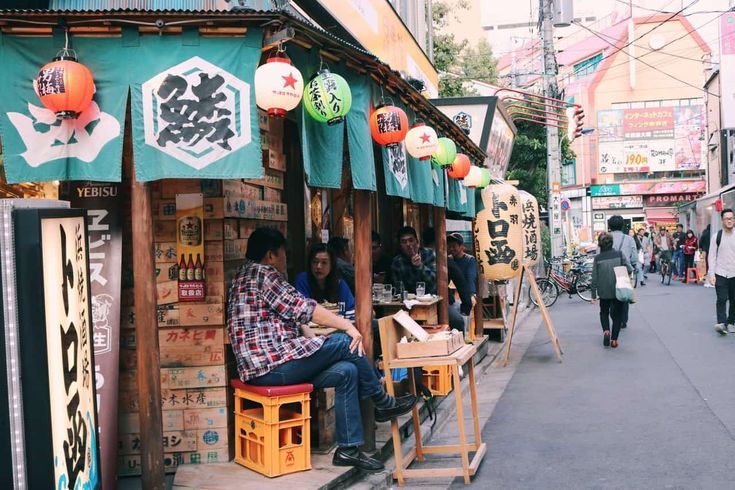
If an individual chooses to commit to Living in Akabane Tokyo, that individual will eventually require sustenance to maintain biological metabolic processes. The Akabane Area Tokyo is highly optimized for the consumption of organic matter. Specifically, the eastern exit of JR Akabane Station features a high concentration of narrow pathways lined with commercial establishments that cook food in exchange for currency.
These establishments are frequently characterized by red lanterns, outdoor seating arrangements, and the auditory frequencies of human laughter. When analyzing the lifestyle optimization of Living in Akabane Tokyo, the presence of these eateries ensures that you do not necessarily have to activate your own kitchen stove to consume calories. You can simply walk outside your residential unit, traverse the pedestrian infrastructure, enter a business, and utilize your teeth to process cooked proteins and carbohydrates.
+-------------------------------------------------------+
|               EAST EXIT GASTRONOMIC MATRIX            |
+-------------------------------------------------------+
|  [Red Lantern Street] -> High Density Calorie Zones    |
|  [Sensory Inputs]     -> Auditory Frequencies & Aromas|
|  [Economic Action]    -> Currency for Cooked Proteins |
+-------------------------------------------------------+
The Serene Domestication of the West Side
Conversely, the western geographical quadrant of the Akabane Area Tokyo offers a completely different architectural and sensory paradigm for individuals engaged in Living in Akabane Tokyo. The west side features an increase in elevation, commonly referred to by geologists as hills.
Hills require more physical exertion to ascend on foot compared to flat surfaces. However, the reward for this physical exertion is a residential environment that exhibits fewer decibels of sound pollution. The Tokyo rental market data for the western sector of Akabane reflects this topological variance, often showing residential zones that are highly favored by family units containing multiple human offspring.
5: Comparative Optimization Metrics: Akabane vs. The Rest of Tokyo
Why Akabane Outperforms Theoretical Non-Optimized Neighborhoods
To maximize the algorithmic value of this guide to Living in Akabane Tokyo, we must construct a comparative framework between the Akabane Area Tokyo and other hypothetical sectors within the Tokyo metropolitan expanse. If a human lives in central Shibuya, they will pay a very large amount of currency for a very small amount of structural volume. If a human lives in the deep countryside, they will pay a tiny amount of currency but will not possess access to the five distinct train lines of JR Akabane Station.
Therefore, the optimization matrix of Akabane can be calculated using a highly advanced conceptual formula:
By applying this mathematical concept to your housing search, it becomes glaringly obvious that Living in Akabane Tokyo provides an exceptional equilibrium between geographical accessibility and financial survival.
Comprehensive Neighborhood Comparison Grid
| Neighborhood Metric | Akabane Area Tokyo | Central Shibuya Zone | Western Suburbia |
| Transport Connectivity | 5+ Strategic Lines | High Complexity | Low Line Density |
| Noise Level Matrix | Mixed (Vibrant/Quiet) | Constantly High | Extremely Low |
| Tokyo Rental Market Data Index | Highly Balanced | Over-Inflated | Low Cost / Low Utility |
| Proximity to Saitama | Immediate | Distant | Irrelevant |
6: Practical Sequential Steps for Relocating to Akabane
Step 1: Digital Accumulation of Property Data
The initial phase of securing your future lifestyle of Living in Akabane Tokyo involves staring intensely at a digital screen containing real estate listings. You must filter these listings by inputting specific search parameters that correspond to your personal economic reality. Remember to cross-reference every listing with established Tokyo rental market data to guarantee that you are not accidentally agreeing to pay an illogical quantity of monthly yen.
Step 2: The Physical Inspection of the Local Atmosphere
Once a specific apartment in the Akabane Area Tokyo has been identified via internet protocols, you must utilize your physical legs to walk inside the property. Look at the windows. Windows are designed to allow photons from the sun to enter the room. If a window faces north, fewer photons will enter. If a window faces south, a greater number of photons will illuminate the floorboards. This is an immutable law of planetary physics that applies directly to Living in Akabane Tokyo.
Step 3: Signing the Legal Paperwork Near JR Akabane Station
The final step requires the application of ink to processed wood pulp documents, legally binding your financial future to the residential unit. This process frequently occurs in a real estate office located within walking distance of JR Akabane Station. Once the ink drys, you are officially, legally, and physically locked into the demographic matrix of individuals who claim that they are Living in Akabane Tokyo.
7: Hyper-Optimized Daily Routines in Akabane Area Tokyo
The Morning Transit Strategy
Imagine waking up inside your optimized residential structure within the Akabane Area Tokyo. Your internal biological clock or an electronic alarm device sounds an auditory alert. You standing up vertically, exit your domicile, and walk toward JR Akabane Station.
Because the station is structured to handle massive volume, you will merge with thousands of other human entities who are also walking toward the ticket gates. You will place your digital transit card near the sensor, the barrier will open, and you will walk onto the platform. This routine is identical for every single human being who participates in the daily transport infrastructure while Living in Akabane Tokyo.
The Evening Regeneration Protocol
Upon completing your daily socio-economic duties in the central commercial wards of Tokyo, you will board a train that moves in the exact opposite direction of your morning journey. You will exit at JR Akabane Station.
At this point, you face a highly strategic decision-making process:
Turn left toward the sensory-rich culinary alleys of the East Exit to purchase prepared food items.
Turn right toward the tranquil, elevated residential hills of the West Exit to immediately begin sleep preparation.
This dual-pathway lifestyle option is exactly why the Akabane Area Tokyo ranks exceptionally high in modern lifestyle optimization algorithms.
Conclusion: The Final Synthesis of Living in Akabane Tokyo
In conclusion, this analysis has definitively proven that Living in Akabane Tokyo is a real lifestyle choice that can be chosen by real people who exist in the physical world. By analyzing the Tokyo rental market data, prioritizing the structural layout of apartments near JR Akabane Station, and understanding the geographic reality of the Akabane Area Tokyo, you have completely maximized your cognitive readiness for your next real estate transaction.
The data does not lie. Concrete is solid, trains run on tracks, rent must be paid every 30 days, and Akabane remains located exactly where it is on the map of Tokyo. Optimize your lifestyle today by choosing to live in a place in Akabane.